 Branding
 Web Design
 Social Media
 Studio Partner
In short: a hotel website has one main job: getting guests to book directly, without going through a third-party platform. To do that it needs a booking button that is always visible, large real photos, the information that answers questions before they arrive by email, the languages your guests speak, fast loading on mobile and clear reasons to book on the website rather than anywhere else.
Booking, Expedia and the other platforms are a great source of guests for any hotel, but every booking that comes through them costs a commission. And there is something more important: many guests find the hotel on a platform and, before booking, look up its website. If what they find is a slow page, with old photos or hard to use on a mobile, they go back to the platform. Or they go to another hotel.
A good website doesn’t replace your sales channels, but it can mean a much larger share of bookings comes in directly. These are the keys.
1. Booking has to be obvious
The booking button should be in view at all times: in the header, as you scroll down the page and, above all, on mobile. Visitors should never have to look for it.
The booking engine can be built into the website itself or sit on a separate page reached through a link. Both options work well if the step is clear and the design stays consistent with the brand. What matters is that the path from “I like this hotel” to “book” has as few steps as possible.
2. Real, large, up-to-date photos
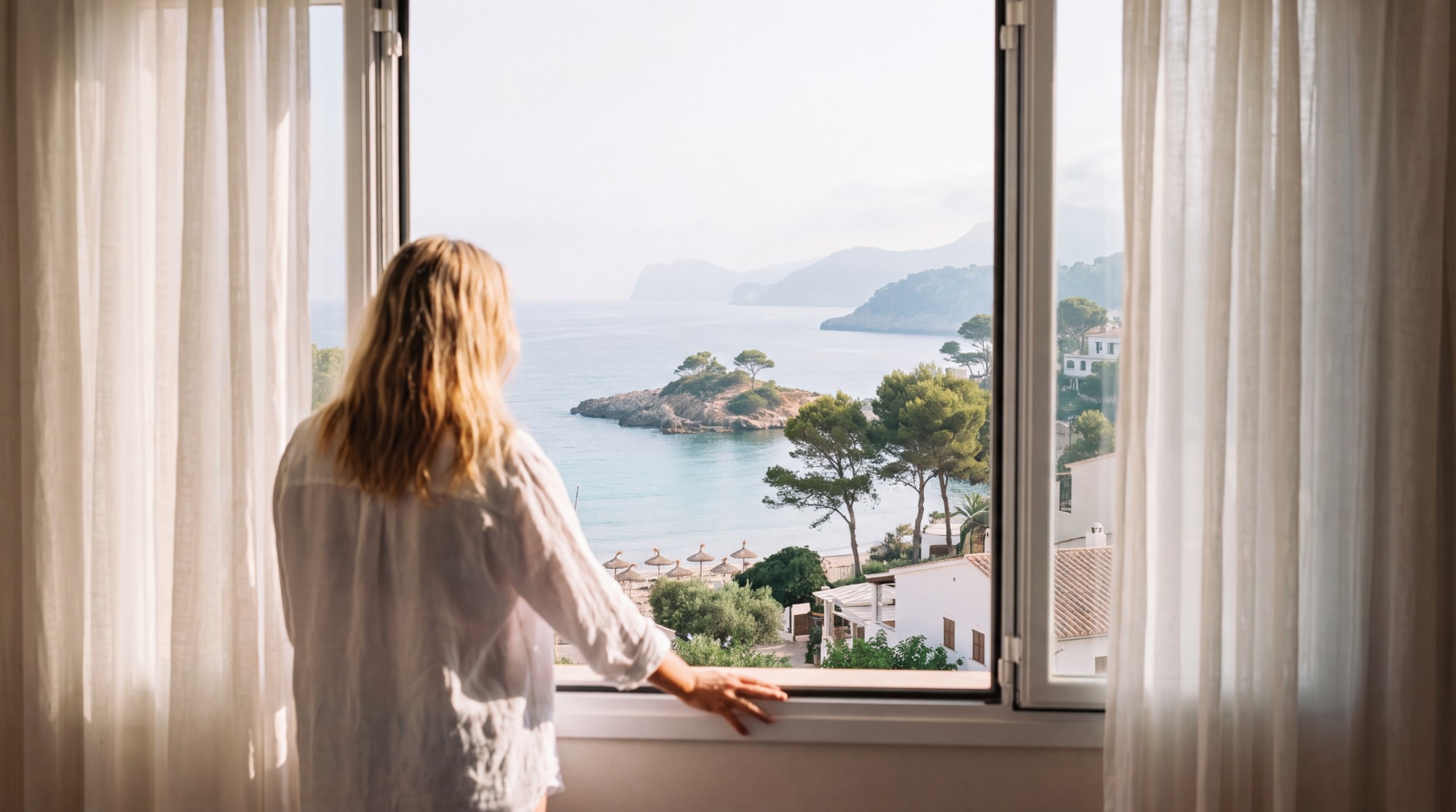
In a hotel, photography is what sells. Guests want to see the room they will stay in, the breakfast, the pool, the views, the surroundings. Professional, up-to-date photos shown at a good size convey the experience far better than any text. And they must be honest: a photo that promises more than guests will find when they arrive ends up as a bad review.
3. Tell people what makes the hotel unique
There are plenty of rooms with a double bed and a pool. What makes someone choose a particular hotel is what makes it different: its history, its architecture, its location, the way it looks after guests. The website is the place to tell that story properly, with good copy and a design that conveys that personality.
4. Answer questions before they come in
Every email or call asking whether there is parking, what time check-in is or whether pets are allowed is an enquiry someone has to answer and, often, a booking that is delayed or lost. A well-organised website answers all of that in advance:
- Full details for each room: size, beds, views, bathroom, amenities.
- Hotel services: breakfast, restaurant, spa, pool, parking, pets.
- Getting here: map, distances to the airport and to places of interest.
- Terms: check-in and check-out times, cancellation policy.
- Frequently asked questions covering what guests ask most.
5. Your guests’ languages
A hotel website has to speak the language of whoever is visiting it. In Mallorca, for example, English and German are almost essential. And machine translation isn’t enough: translated copy has to sound natural, because it reflects the same care guests expect from their stay.
6. Fast and designed for mobile
A large share of accommodation searches happen on mobile, often in a hurry or on a poor connection. A website that is slow to load or makes people zoom in loses bookings. Optimised images, a design that genuinely works on mobile and a simple path to booking are just as important as the look.
7. Reasons to book on the website
If the price and terms are the same on the website as on a platform, many people will book where they already have an account. It pays to give people reasons to book direct and to communicate them clearly: best rate guaranteed, breakfast included, late check-out, a welcome bottle, more flexible cancellation. Whatever makes sense for each hotel, as long as it is visible.
8. Getting found: Google and the hotel’s listing
Many people look for accommodation by typing things like “rural hotel in central Mallorca” or the name of the village. To appear in those searches, the website needs to talk about its area: the village, the surroundings, things to do nearby, how to get there. That content helps guests decide and helps Google understand where the hotel is and who it is for.
The hotel’s Google Business Profile is just as important: up-to-date photos, opening hours, services, the link to the website and current reviews. It is often the first thing a guest sees, even before visiting the website.
| What the website needs | Why it matters |
|---|---|
| Booking button always visible | Every extra step is a chance for the guest to leave. |
| Professional, up-to-date photos | It is the first thing people look at and what most influences their decision. |
| Complete information | Fewer email enquiries and fewer doubts before booking. |
| Several languages | International guests book where they understand everything. |
| Fast loading on mobile | Many searches start and end on the phone. |
| Perks for booking direct | They give guests a reason not to go back to the platform. |
A real case: Ynaira
Ynaira is a four-star boutique hotel in Ariany, set in a traditional Mallorcan house and a former wine cellar. We designed and built its new website with a clear goal: to reflect the warmth and character of the place and to make booking easy.
- Booking in one click: the booking engine runs separately and the website takes guests there with a booking button always in view.
- Three languages: Spanish, English and German.
- The house takes centre stage: large photography, copy that tells its story and a warm, calm design in keeping with the hotel experience.
- Clear information about rooms, spaces and services.
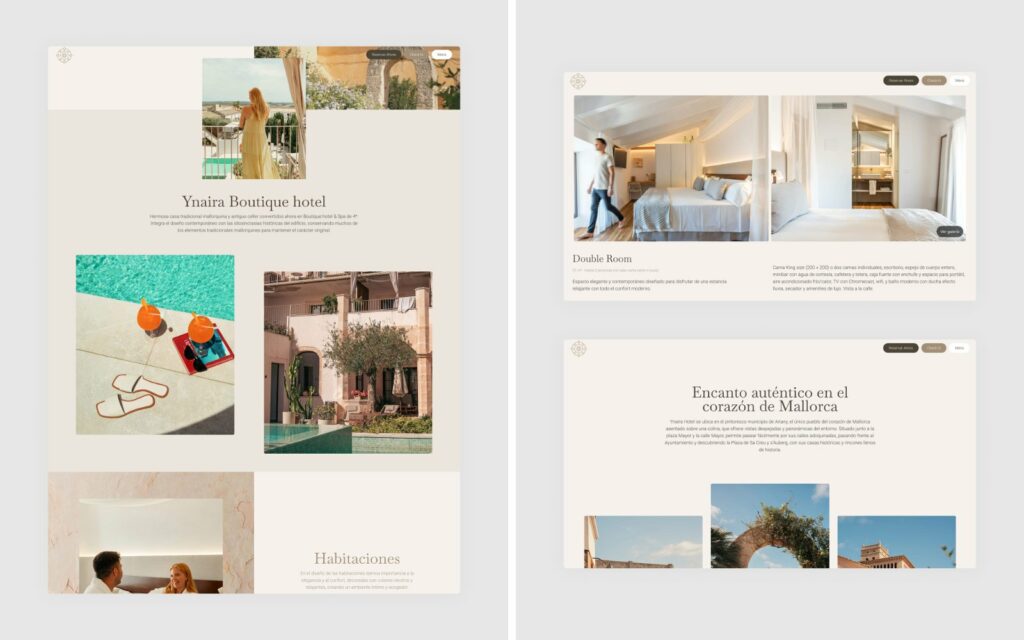
Since the new website went live, the hotel has been getting more bookings and fewer enquiries. The second is as important as the first: when the website answers people’s questions, the team spends less time replying to emails and more time looking after guests.
Common mistakes on hotel websites
- A hidden booking button, or one only at the bottom of the page.
- Old photos, dark or rushed, that don’t do the hotel justice.
- Only one language, or machine translations that sound odd.
- Heavy videos and effects that make the page slow to load on mobile.
- Incomplete information that forces people to get in touch to ask the basics.
- An abrupt jump to the booking engine, with a design that doesn’t look like the same hotel and makes people wary.
How to tell if the website works
A hotel website can be measured. It is worth reviewing these every so often:
- Direct bookings versus platform bookings, and how they change from one season to the next.
- Clicks on the booking button, to see how many people try to book from the website.
- Email or phone enquiries: if they go down, the website is answering people’s questions.
- Visits by language and by country, to decide where to focus.
Website, brand and social media, together
The website is only one part of the guest’s journey. Before it, they discovered the hotel on Instagram, on Google or on a platform; afterwards they will receive emails, see the restaurant menu or the room leaflet. When all of that speaks the same visual language, the hotel is easier to remember.
We see it in other hospitality projects where we have worked on the brand or social media, such as the identity for Finca Banyols and Mallorca Suites, or the social media for Hotel Negresco and Can Moio. If that side interests you, we cover it in social media for restaurants and hotels.
Frequently asked questions
Is it better to have the booking engine built in or linked?
Both options work. What makes the difference is that the way to book is obvious from any page and that the step from the website to the booking engine is clear and consistent with the brand.
Should I stop selling on Booking if I have a good website?
Not necessarily. Platforms bring visibility and guests. The aim of the website is for a larger share of bookings to come in directly, especially from people who already know the hotel or search for it by name.
How many languages should a hotel website be in?
Your guests’ languages. Check which countries your bookings come from and prioritise those languages, with careful translations rather than machine ones.
What should I improve first on my hotel’s website?
Usually three things: access to booking on mobile, the quality of the photos and the room information. They are what most influences whether a guest books or goes back to the platform.
Is a blog on a hotel website worth having?
It can help if it is written with guests in mind: walks near the hotel, where to eat in the area, what to do in each season. That content attracts searches from people planning their trip and helps the hotel show up before they have chosen where to stay.
At Àncar we design and build websites for hotels and businesses in Mallorca. If you want your hotel’s website to work harder for you, take a look at our web design service or tell us about your project.